Calculator
The powder is the peptide. BAC water is the liquid. Mixing them is reconstitution. This only does the math.
mg
Milligrams. What’s printed on the vial. Usually 5 or 10. Easier for most people.
mcg
Micrograms. A thousand times smaller. 10 mg = 10,000 mcg. Same stuff, smaller unit.
mL
Milliliters. Liquid volume. How much BAC water you put in.
BAC water
Bacteriostatic water. Sterile water + a preservative so you can enter the vial more than once.
Units
Marks on a U-100 insulin syringe. 100 units = 1 mL. If that’s new, stay on mg.
How people actually mix it
General lab handling. Not a protocol for your body.
1. Powder vial
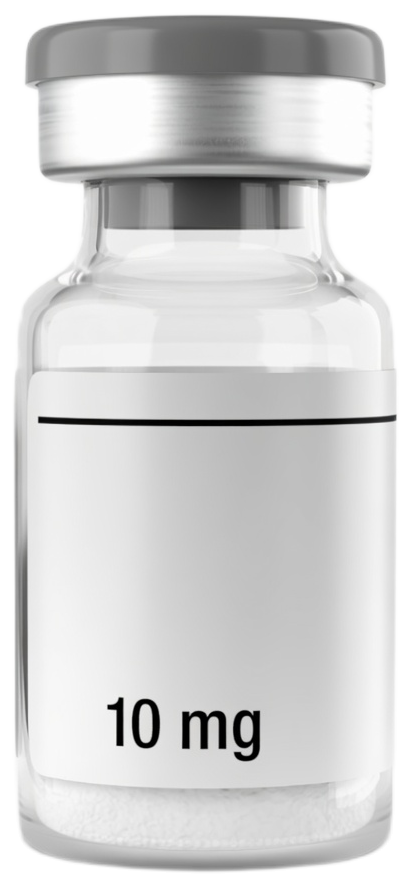
This is the peptide. A cake of white powder. The number on the label is the total in the bottle, often 10 mg, before any water.
2. BAC water
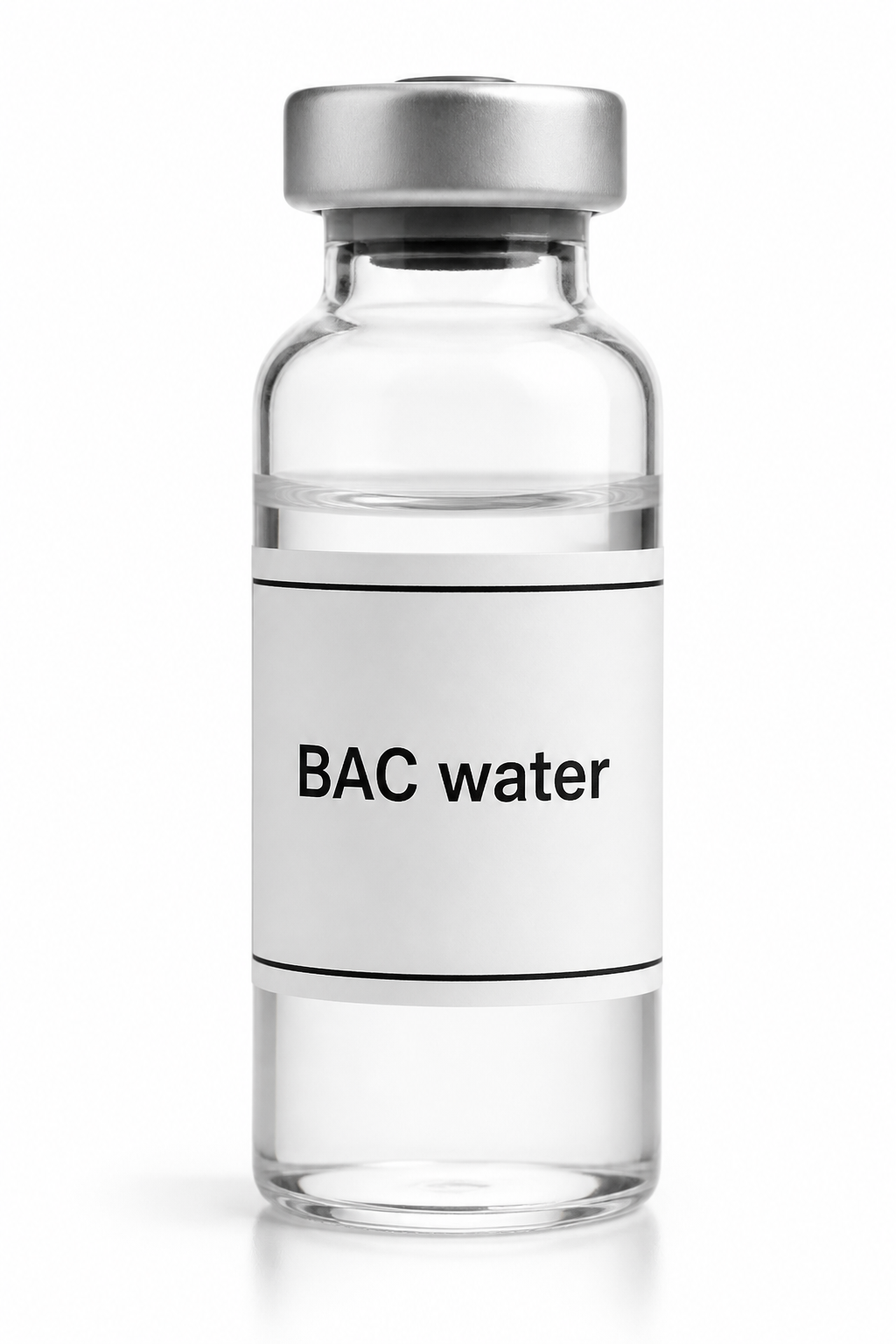
Bacteriostatic water. Sterile water plus a preservative. This is what turns powder into liquid. The mL you add is the water box above. 2 mL into a 10 mg vial is a common starting example, not a rule.
3. Luer-lock + tip
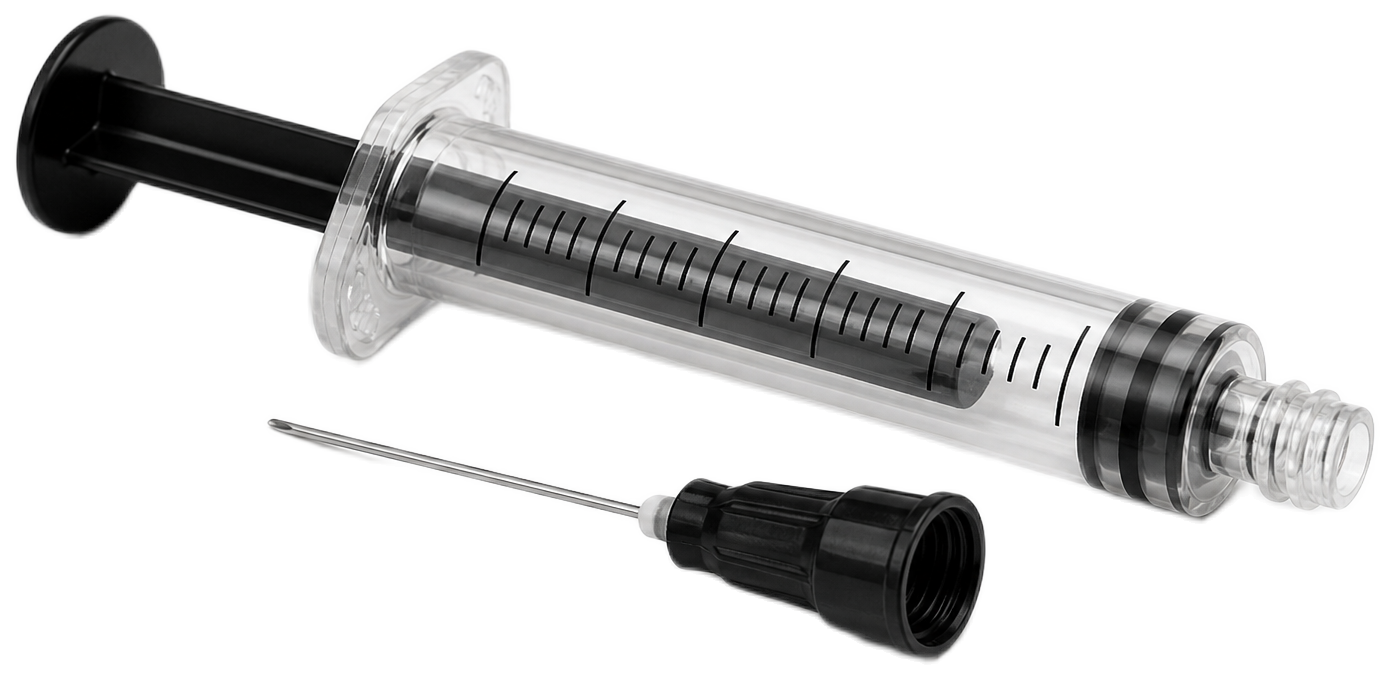
The bigger 3 mL syringe is for mixing. The metal tip twists on so it does not pop off.
4. Air in, then flip
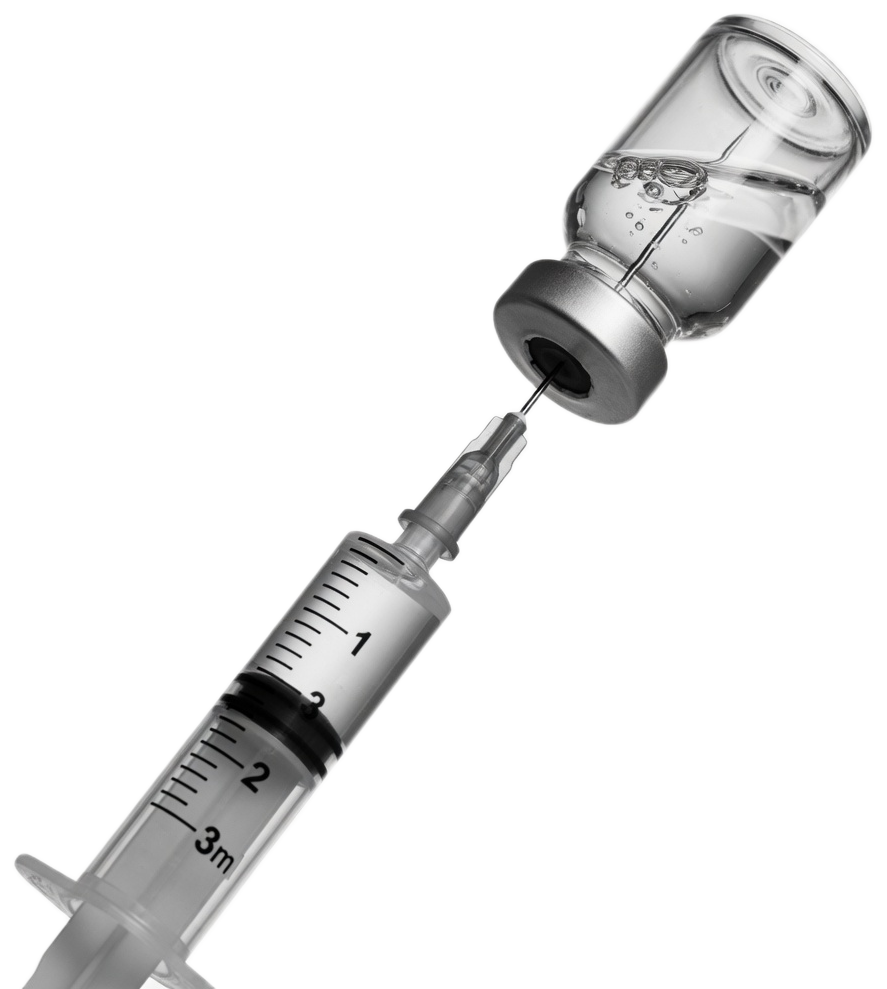
Pull air into the syringe first, about as much as the water you want. Pin the BAC vial. Flip it over. Push the air in. Then draw the water. It comes easier that way because you replaced the volume.
5. Down the side
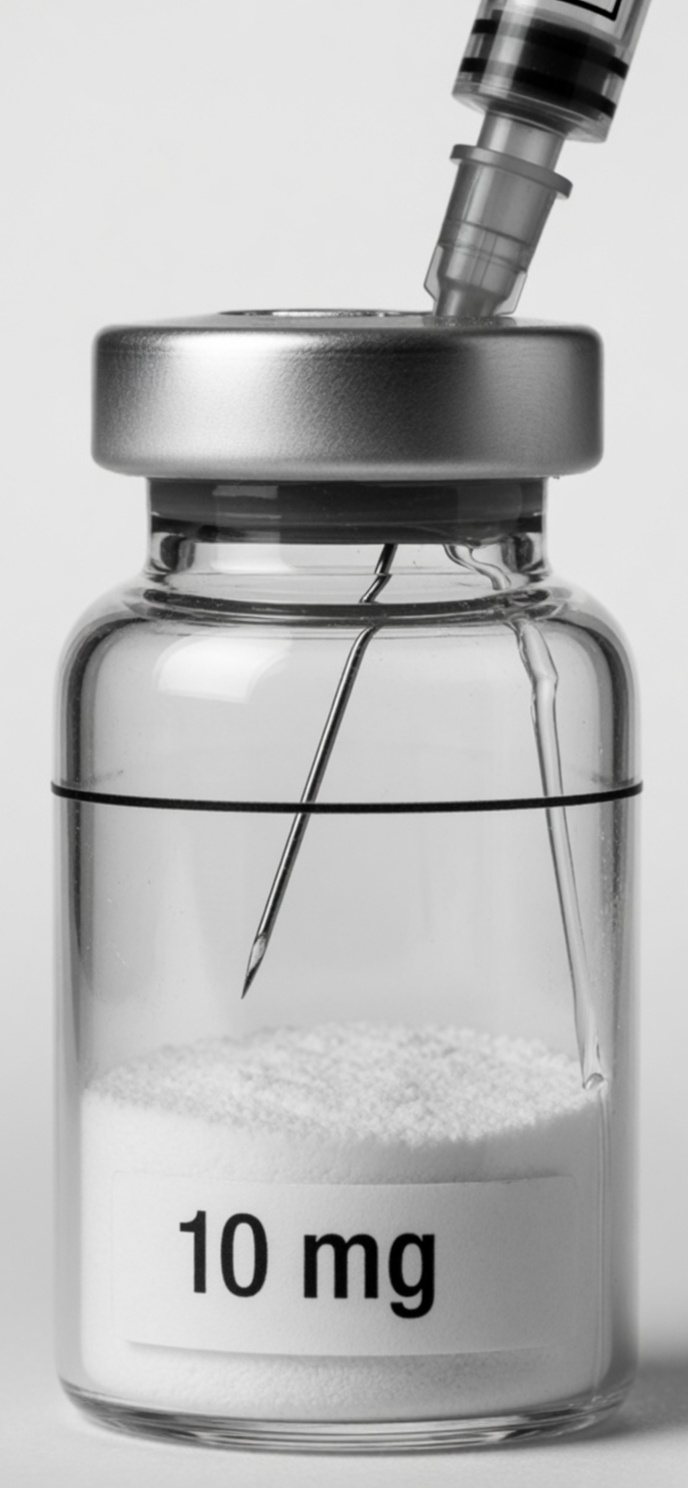
Take the tip out of the BAC. Put it through the stopper of the peptide vial and aim at the glass wall, not the middle of the cake. Let the water run down the side. Do not blast the powder.
6. Swirl or roll. Don’t shake.
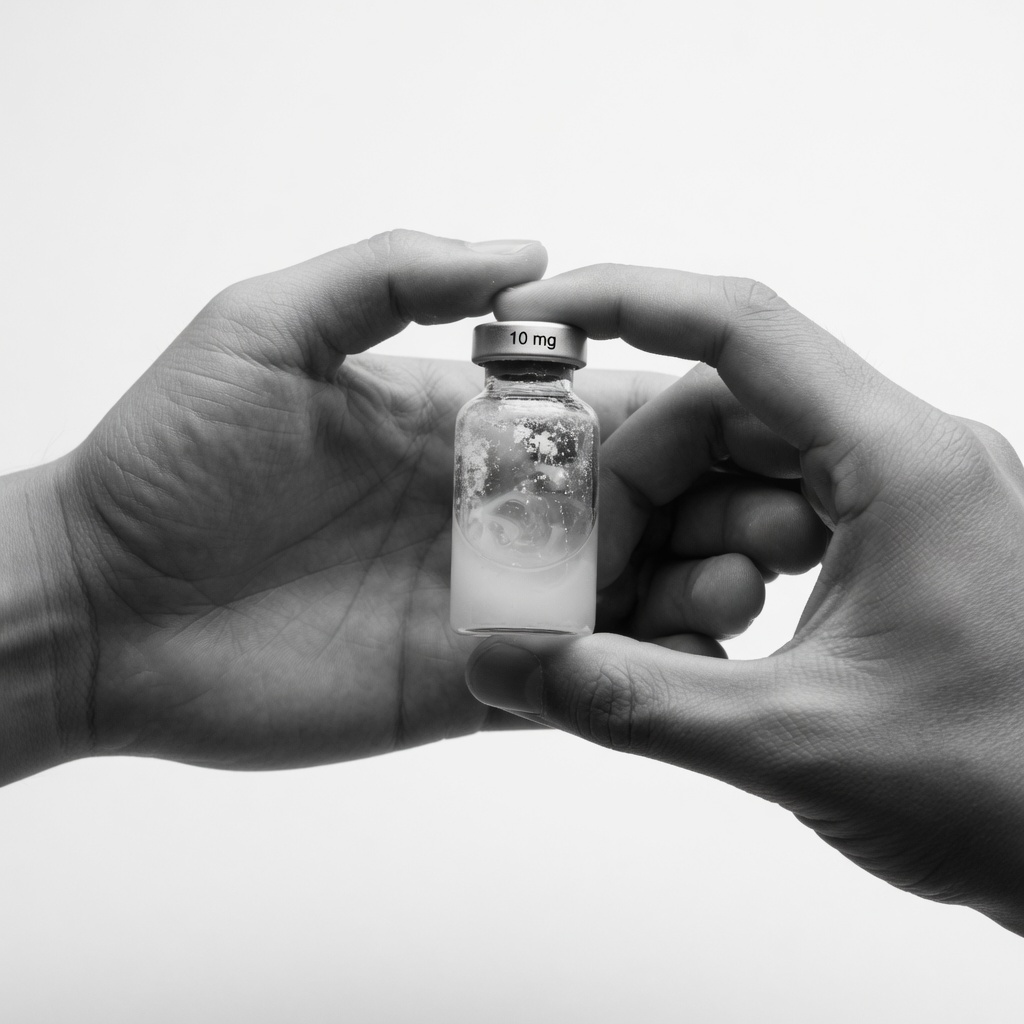
Roll it between your hands, or swirl it. Shaking can damage the peptide and makes foam. Wait until it looks clear.
7. Fridge, not the back wall
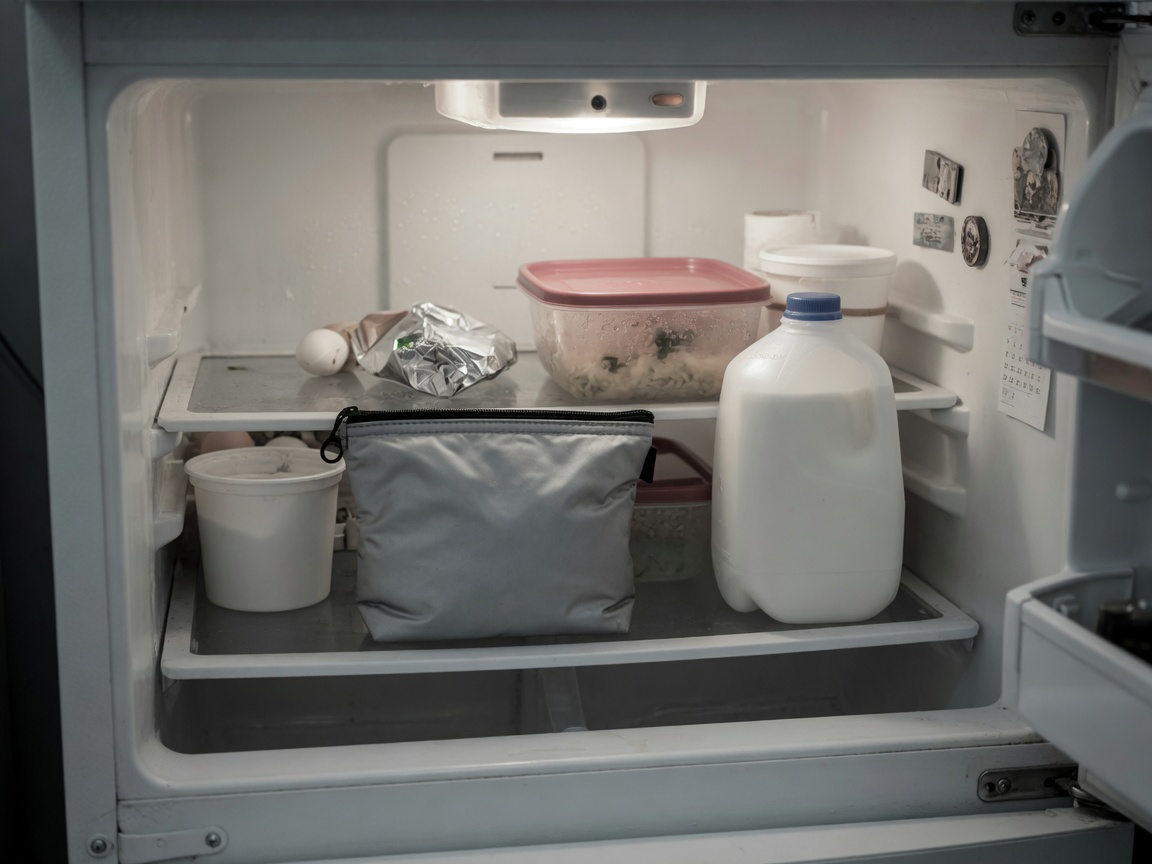
Refrigerate it as soon as it dissolves. Not the freezer. Not the back of the fridge, where it can freeze. A pouch on a middle shelf. This pouch.